Shun visits his grieving parents from Heaven
The Reason I JumpShun visits his grieving parents from Heaven in a sequence that turns the afterlife’s promise of continued connection into a painful question of what connection can accomplish. He can return to the house and remain near his mother, but she cannot see or hear him; a breeze, a remembered warmth, and her sense that he is present are all that pass between them. As her grief deepens into a medical crisis, his invisible companionship no longer feels sufficient. The visits culminate in his resolve to help her, making love not a remedy already at hand but the reason he must choose what to do next.
The First Return Home
After finding himself back at his house, Shun rushes from room to room searching for his mother. He calls to her softly from behind, but she does not turn around. The failed greeting gives him the answer he had hoped not to receive: he is dead, and his mother cannot perceive him in the ordinary way. His final hope is dashed, and he goes around to stand in front of her, at least able to look at her face.
His mother is dressed in black and looks sad and crushed. Shun apologizes to her in his mind for having died, but the apology cannot become a conversation. Then an intimate contact interrupts the separation: a subtle breeze moves between them, and her hand touches the body she apparently cannot see. Shun feels the warmth he remembers from being very small, when she cuddled him. The scene does not erase the fact of his death; it lets a bodily trace of their former closeness persist across it.
Shun’s father enters from the living room and asks what his mother is doing. She replies that somehow she feels Shun is in the room. His father answers that Shun is always with them. The parents’ words acknowledge a presence that neither can fully explain, while Shun himself remains uncertain what to make of it. He still has the same feelings and wants to help them, but cannot see how to do so. He shuts his eyes and is carried back to Heaven at astonishing speed.
Companionship Without Speech
The return is not a single visit. As Shun becomes accustomed to life in Heaven, he makes friends and discovers a peaceful place without barriers of language, ethnicity, or era. He travels around Earth and speaks with people in Heaven, but his parents’ home remains an important destination. There he cannot talk directly with his parents. Instead, he sees their faces and listens to them talk about him. Even this limited access makes him happy enough to stay brave and continue.
That routine establishes the particular comfort and frustration of his afterlife. Shun can be present as a watcher and listener, and the family bond remains emotionally real to him, but ordinary exchange is impossible. His mother’s earlier sense that he is in the room offers a fragile counterpoint: she can feel something of his presence, though she cannot recognize or converse with him. For Shun, being near his parents matters, but nearness does not give him control over their grief.
His Mother’s Grief Deepens
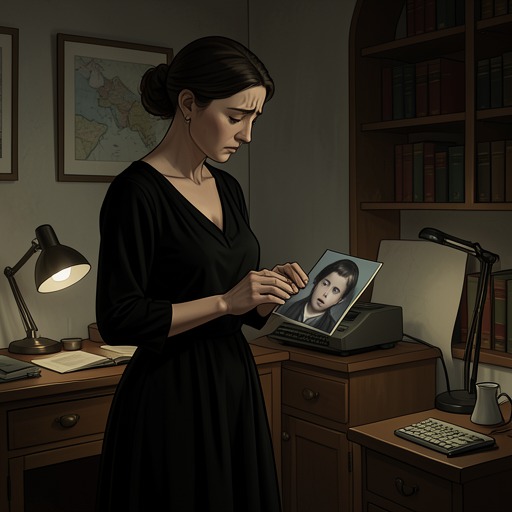
During one visit, Shun sees that his mother is miserable and does not seem to be eating. She stares at his photograph with tears in her eyes and says she does not think she can go on living without him; she wants to be where he is. Then she collapses face down on the table, weeping. The photograph, rather than Shun himself, is what she can look at, while he watches unseen from beside her.
Shun is shaken and begins to cry too. He had believed his mother was getting over his death and that things would be all right. He gently hugs her shoulders, but she cannot know that he is there. She continues to cry until dark, and he stays beside her. The embrace gives him a way to act on his love, but it cannot stop her suffering or tell her that he has heard her.
Back in Heaven, Shun thinks about his parents every day. He had expected that, with time, life would return to normal for them. Instead, he recognizes that their grief may last for the rest of their lives. He can visit, but he cannot help them, and that helplessness sinks him into despair. He calls out to God for a favour because watching his parents mourn without being able to reach them has become unbearable.
The Hospital and a Decision
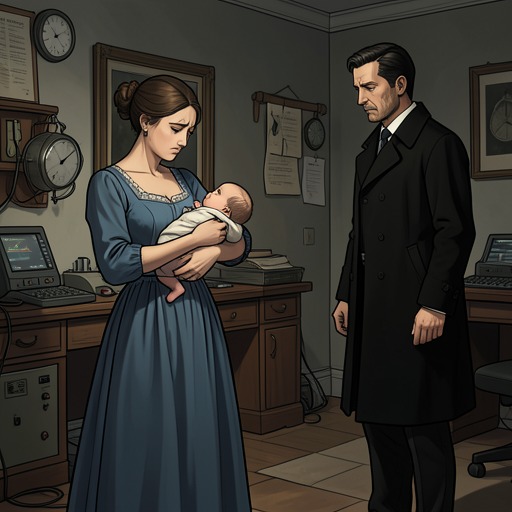
A year after Shun’s death, he visits home again, this time for the first time in a long while. His mother is not there. When the phone rings, his father answers and says he will come right over; his voice sounds like an empty husk. Shun follows him to the hospital with an ominous feeling. In his mother’s room, he sees her lying in bed, exhausted and sickly pale, so changed that she almost looks like a stranger. His father looks utterly worn out too.
The doctor says there is no guarantee that Shun’s mother will pull through. Before the examination is even finished, Shun rushes to her and pleads for her not to die, repeating the appeal, but his voice cannot reach her. His old understanding of separation—that he and his parents might endure it as long as their hearts stayed connected—now seems inadequate. She appears to have lost her spirit and will to live, and the son who cannot be heard faces the possibility of losing her as well.
In her delirium, however, his mother calls Shun’s name and says she wants to see him. The call intensifies his pain: she longs for him, but the longing cannot bridge the separation by itself. Shun thinks that he caused her grief and therefore has to do what he can to help her. He makes up his mind. The visit’s decisive change is from witnessing to responsibility: his presence has comforted him, and his mother has sensed him, but neither has been enough to protect her. Her crisis forces him to move beyond the hope that time will repair the loss.
Significance of the Visits
The visits make the afterlife’s connection to family tangible without presenting it as a simple reunion. Shun can feel his mother’s touch, remember her childhood cuddles, hold her shoulders, and hear her speak about him. Yet he cannot be seen, answer her, or make his pleas reach her in the hospital. The contrast between physical intimacy and communicative absence gives each return a different weight: the first offers warmth amid proof of separation; the later visits expose how little that warmth can do when grief overwhelms his mother.
The sequence also gives Shun’s relationship with his parents a continuing form after his death. He remains attached to their faces, their voices, and their suffering, and their bond shapes his experience of Heaven. But the story does not treat love as automatic power over the conditions of death. Shun’s mother’s faint sense of him and her delirious call establish that the connection persists, while her illness shows that persistence alone cannot resolve what has happened. His final decision grows from that contradiction: he is still unable to speak to her, but can no longer accept helplessly watching her approach death. The visits thus turn bereavement into an urgent choice, ending not with reunion but with Shun’s resolve to act.